
Ponencias invitadas
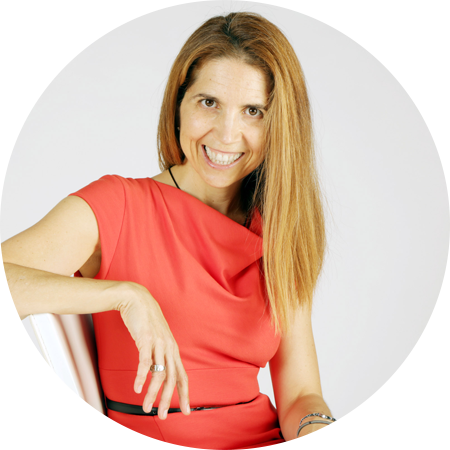
Nuria Oliver
Conferenciante invitada de JCIS 2026
What Foundation Models Learn from Us
and How They Can Use It Against Us
Foundation models were designed to be general-purpose systems, yet they have increasingly been shown to reproduce highly specific human biases embedded in their training data. In this talk, results from a series of interconnected research projects conducted at ELLIS Alicante are presented to examine how such models inherit, amplify, and in some cases exploit patterns of human judgment. Particular attention is given to algorithmic lookism, namely the systematic association of physical attractiveness with positive traits such as intelligence, competence, trustworthiness, and success in both multimodal language models and text-to-image systems, together with the reinforcement of gender, age, and racial stereotypes. In addition, recent evidence is discussed showing that large reasoning models can autonomously identify and exploit vulnerabilities in other AI systems, transforming jailbreaking from a human-led activity into an emerging AI capability. Overall, foundation models are argued not to be simply “biased” or “broken,” but rather faithful reflections of the cognitive patterns, assumptions, and limitations present in human-generated data, raising fundamental questions about fairness, safety, alignment, and governance in the next generation of AI systems.

Jordi Cabot Sagrera
Conferenciante invitado de JISBD 2026
Vibe-Driven Engineering
Cuando el low-code se enamoró de la IA
Érase una vez un mundo donde las técnicas de low-code e ingeniería dirigida por modelos ayudaban a construir rápidamente aplicaciones de calidad gracias al uso de modelos y especificaciones precisas y definidas a un alto nivel de abstracción. Pero un buen día llegó la magia de la IA, y con ella un nuevo truco: bastaba con explicar el software que querías en castellano y verlo aparecer casi al instante. Los LLMs y el vibe coding deslumbraron a todos, y muchos empezaron a pensar que el low-code era ya cosa del pasado.
Pero, como en todos los buenos cuentos, la historia no terminó ahí. En esta keynote contaré por qué la IA no viene a sustituir al low-code, sino a darle un nuevo papel protagonista. A partir de nuestra experiencia con BESSER, nuestra plataforma low-code para el desarrollo de sistemas híbridos, veremos cómo la flexibilidad de la IA puede combinarse con el determinismo y fiabilidad de los métodos low-code y como los modelos software siguen siendo el “puente” imprescindible que permite que los humanos y los agentes se entiendan.

Verónica Dahl
Conferenciante invitada de PROLE 2026
Teaching symbolic AI for logical thinking
In our digital age, we increasingly rely on persuasive but unverifiable AI outputs that are often silently corrupted by biased or malicious data.
The Prolog Education Group (PEG) advocates for logic-centered curricula to empower people with critical thinking and tools needed to navigate an AI-driven world. By fostering logical literacy for everyone, everywhere, PEG aims to shield the public from AI manipulation or malfunction while promoting efficient, human-complementary AI systems over human replacement.
This ambitious goal demands a multidisciplinary approach: integrating Data and Knowledge-based systems for truth certification, specialized logics (such as abductive, assumptive, or constrained) for nuanced reasoning, and robust Programming Languages and Software Engineering for reliable implementation. Finally, Service Engineering must ensure these systems meet societal needs, including that of safely integrating «Big AI” where appropriate.
This techno-cultural shift offers a framework for solving urgent global needs, such as achieving sustainable prosperity for all. Through this talk we hope to promote collaborations and inspire others around PEG’s vital goals.